If you have typed “tree lopping” into Google, you probably want a tree cut back because it has got too big, it is shading the whole yard, or it is getting close to the house.
That is a completely reasonable thing to want, and we can do it. But there are two very different ways to cut a tree back, and the cheap way costs more in the end. Here is the difference in plain English.
Lopping, in the old sense, means cutting the main limbs back to stubs. It is fast. It is cheap. From the footpath the day it is done, it looks tidy.
What happens next is the problem. The tree responds to that kind of damage by throwing out a burst of thin, fast growing shoots from around the cut. Those shoots are only attached to the outer layer of wood, not anchored into the structure of the branch like the original limbs were. Meanwhile the stub, which cannot seal over, starts to rot from the cut face inward.
Three years on you have a heavier canopy, held on by weaker attachments, growing out of decaying wood. In a storm, that is what comes down.
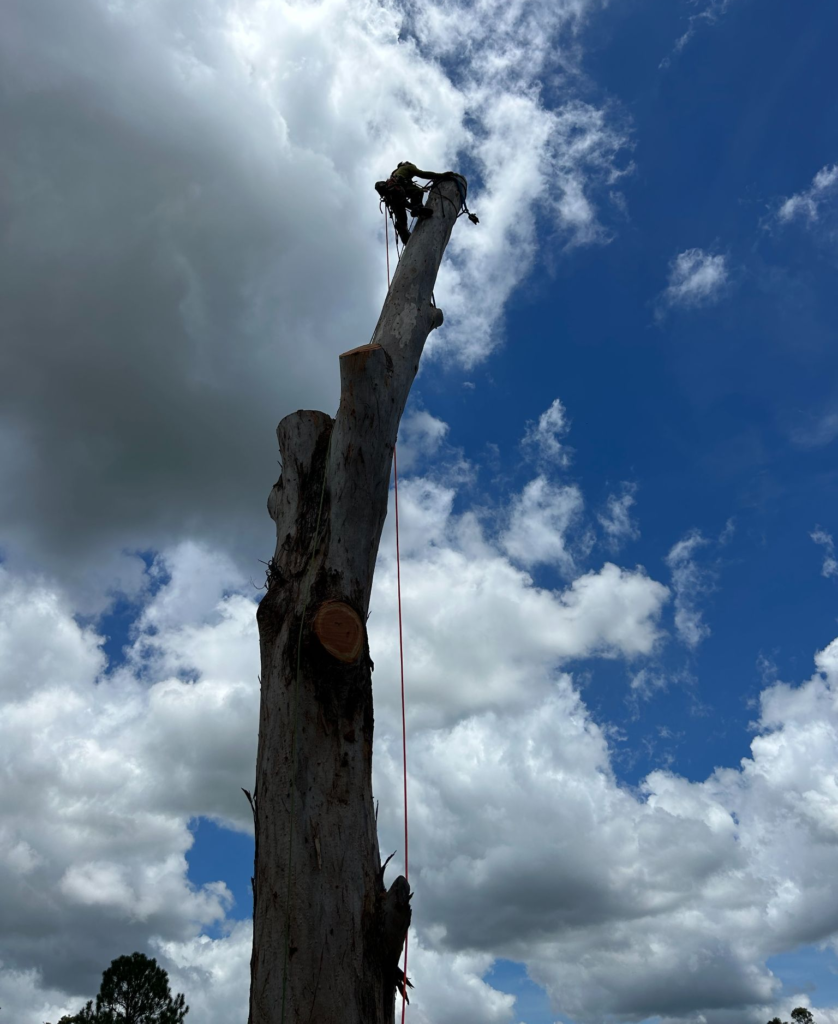
A crown reduction is the alternative. Instead of cutting to stubs, we shorten limbs back to a suitable side branch that can take over as the new leader. The tree keeps a natural shape, the wound seals properly, and there is no explosion of weak regrowth. It takes longer, because the climber has to get up into the canopy and choose each cut rather than working from the edge.
That is what we do when someone asks us to lop a tree. Same result you wanted, a smaller and safer tree, without setting up a bigger problem for later.
Not every tree needs the full treatment. Sometimes the honest answer is that the tree is in the wrong place and reducing it will only buy a couple of years, in which case removal is the better spend.
Cutting back genuinely works when:
The tree is structurally sound and healthy, just too big for the spot. There is deadwood or a dangerous limb to take out but the rest of the canopy is fine. You need light back into the yard, the pool or the solar panels. Branches are heading for the roof, the gutters or a fence line. The tree has developed a heavy lopsided lean and needs weight taken off one side.
We will tell you at the quote which of these you are dealing with.
The crew arrives inside the window you were given, and you will have had a text with live tracking so you are not waiting around.
We set up drop zones and rope access before anything is cut. On tight blocks, and most Gold Coast blocks are tight, branches are lowered on ropes rather than dropped, so nothing lands on the fence, the shed or the neighbour’s roof.
Material goes straight through the 18 inch chipper into the mulch truck as we go, which keeps the site clear and keeps the job moving. If you want the mulch left for your garden beds, say so before we start and we will drop a pile where you want it.
At the end, we rake and blow down the work area. On most residential jobs you would not know we had been there apart from the tree looking better.
Cutting a tree back is usually cheaper than removing it, because there is less material to process and no stump left to deal with.
Our team rate is $660 per hour across an eight hour day, and there is a discounted full day rate of $4,400 for around 7.5 hours on site. Most residential jobs are quoted as a fixed price after we have seen the tree.
The things that move the price are height, how much you want taken off, whether we can get the truck close, and how much green waste comes out. A big spotted gum on an acreage block with room to work is often cheaper per hour than a medium tree in a courtyard where everything has to be carried out by hand.
Sometimes, yes. Pruning is regulated on the Gold Coast, not just removal, and cutting back a protected tree without approval can end in a fine. We check your situation at the quote and explain it before anything happens
Get a free onsite quote and we will tell you exactly what your tree needs.
Traditional lopping, cutting limbs back to stubs, is bad for the tree and creates weak regrowth and decay. A proper crown reduction achieves the same size reduction without that damage, and that is what we do.
It depends on size, access and how much material comes out. Our team rate is $660 per hour, or $4,400 for a discounted full day. Most jobs are quoted as a fixed price after an onsite look.
As a rule of thumb, no more than about a quarter to a third of the live canopy at once on a healthy tree. Take more and you risk stressing it. If you need more off than that, we will talk to you about staging it or about removal instead.
Yes. Green waste is chipped and taken away in our mulch truck, and the work area is raked and blown down. Mulch or firewood can be left on site if you want it.